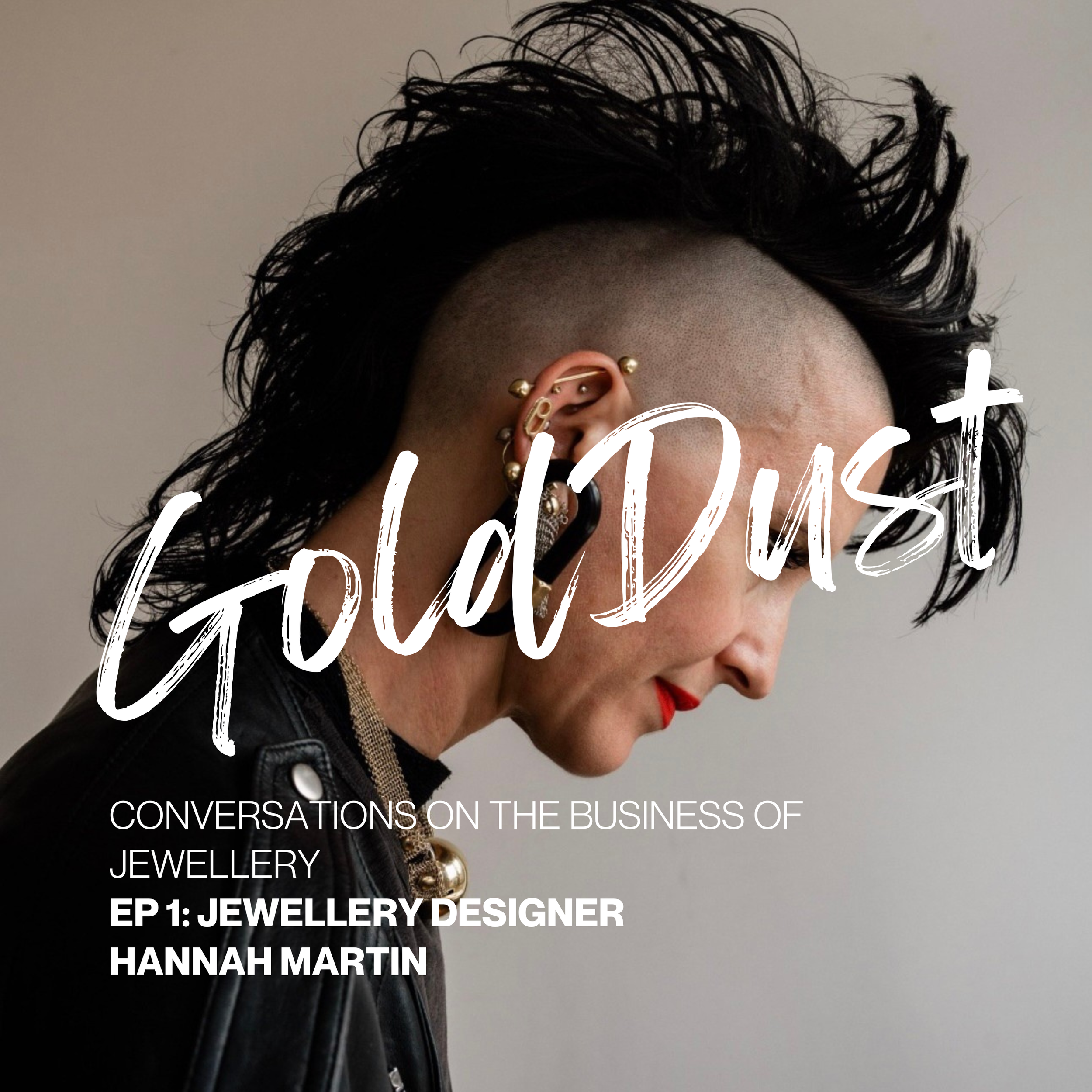
A lot of the jewellers I talk to are two or three years into their business and worried they should be further along by now. So when Hannah Martin came on the GoldDust podcast, I asked her how long it takes to build a luxury jewellery brand. She said nearly twenty years, and she didn't seem bothered by that at all.
Hannah started her namesake brand in 2006. She has never had investors and she hasn't changed her designs to make them more commercial. Her sculptural, gender-fluid jewellery has been worn by Madonna, Rihanna and Zaha Hadid, she designed the BRIT Awards trophies for the nominees, and she now has a studio and showroom in an old grain warehouse in East London.
Getting started with no money
Hannah grew up in a working class mining family in Yorkshire and there was no jewellery at home. She found it on the foundation course at Central Saint Martins, then won a scholarship to work at the bench at Cartier in Paris. Cartier offered her a job and she turned it down to start her own brand.
Before she had any funding, she spent a whole day in a Borders bookshop with one coffee, writing down the names of the magazine editors she wanted to reach. She couldn't afford the postage, so she sent photocopied lookbooks out through the Saint Martins post room. That got her first piece of press, in Sunday Times Style. Lots of jewellers tell me they can't get press without paying for a PR, and I think about this story every time.
Why it took twenty years
Hannah talks about her timeline as something she chose. She spent the time getting the foundations right, she never took money from anyone who wanted a quick return, and there were things outside her control that slowed her down too. She thinks the brand has grown steadily and she has been in charge of it the whole way.
If you're comparing yourself to a brand that launched on Instagram last year and already seems to be everywhere, it helps to remember that a lot of those brands have investment behind them, and investors want results quickly.
Not trying to please everyone
Hannah has never made men's jewellery or women's jewellery, she just makes jewellery, and she was doing that long before the industry started talking about gender-fluid design. Around 70% of her bespoke work is engagement and wedding rings, but she won't call it bridal because she doesn't believe in what the word implies. She knows people search for "bridal" and she has decided to lose that traffic rather than use a word she doesn't agree with.
I'm not telling anyone to ignore SEO. But the brands I remember from my years running The Cut London all had opinions like this, and they stuck to them even when it cost them something.
The mistakes
Hannah was very open about this part. Picking the wrong team members and business partners nearly ended the business. The bigger mistake, she says, was avoiding the money side completely: ignoring cashflow, letting other people handle the finances and telling herself she was just the creative one. She still doesn't enjoy it, but she looks at the numbers now and knows what's going on.
She has also always done consultancy design work and lectured at Saint Martins alongside the brand. During COVID, when sales stopped for about eighteen months, that work kept the business going.
If you're a few years in and worried you're behind, I'd really recommend listening to this one. Hannah's brand took a long time to build, it has a very clear point of view, and she keeps an eye on the money even though she'd much rather be designing.
Listen to the full episode with Hannah Martin on the GoldDust podcast.
GoldDust is the membership for independent jewellery designers building a stronger, more distinctive brand. Join the collective here.