The GoldDust Podcast: The Business of Jewellery
Episode 7: Jeans and T-Shirt Luxury: Bear Brooksbank on Making Big Rings in East London
Bear Brooksbank has spent 14 years making big, weighty fine jewellery from a gated mews in East London, long before chunky rings were everywhere. Her work is rooted in antique jewellery, and her clients now stretch from Shoreditch to New York.
In this episode Bear talks to Kate about learning the trade as an antique dealer’s assistant in Mayfair, launching her own brand with no formal design training, and why the biggest growth in her business came from finally believing people would buy her signature designs.
A conversation about instinct, conviction and playing the long game.
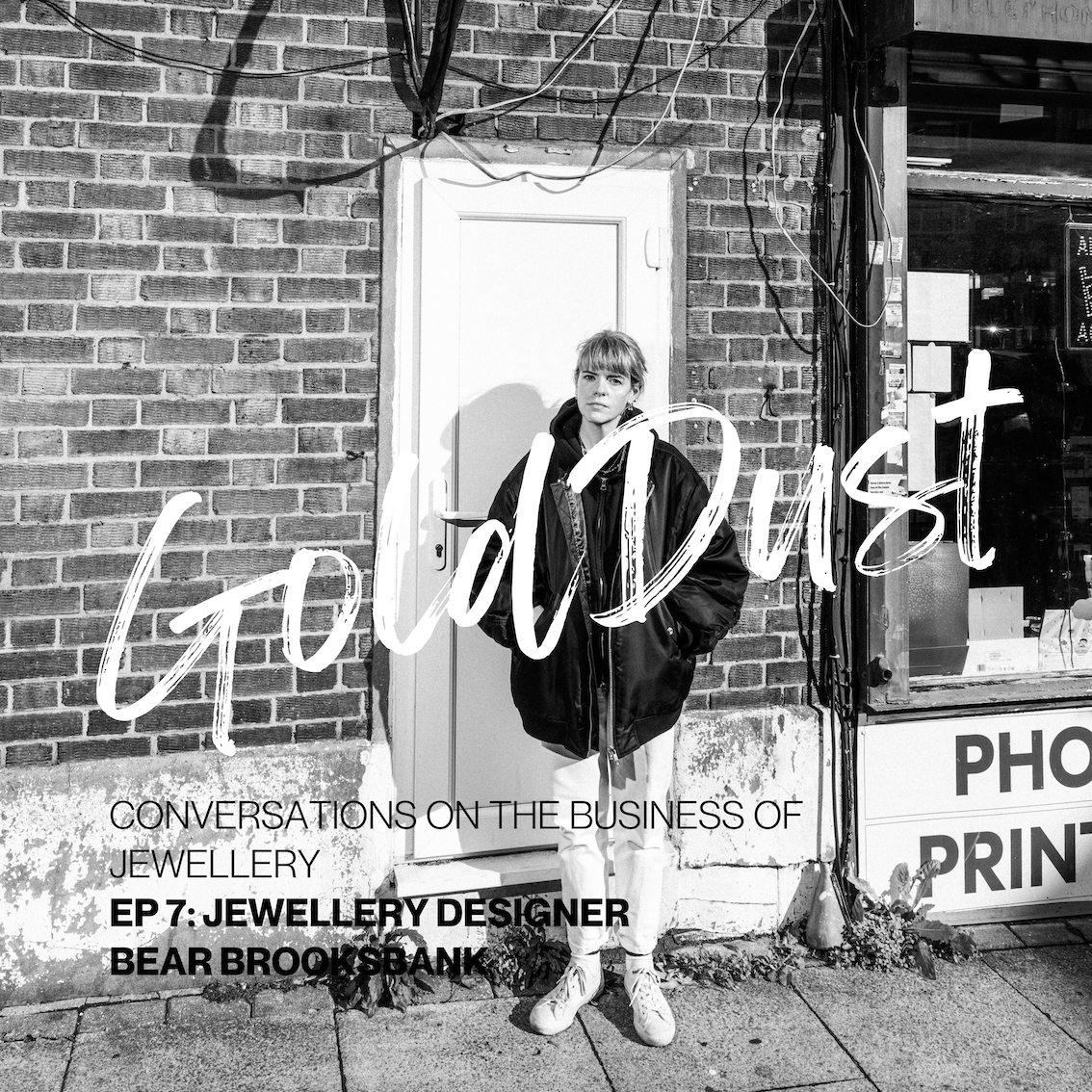
What we cover in this episode:
Learning the trade with antique dealer Humphrey Butler in Mayfair
Launching a jewellery brand with no formal design training
Why a physical studio matters, even off the beaten track
Designing by instinct rather than trend
Selling antique and vintage jewellery alongside bespoke
Bear’s stance on natural versus synthetic diamonds
What PR really does for an independent jewellery brand
Signature designs, sample sets and taking the brand to America
Episode Summary:
Learning on the job in Mayfair
After a short spell at drama school and a job at contemporary art gallery Haunch of Venison, Bear talked her way into two weeks shadowing antique jewellery dealer Humphrey Butler. His assistant handed in her notice while she was there, and Bear stayed for five years. She knew none of the technical language at first, but her obvious love for the pieces won clients over. Running errands up and down workshop staircases taught her more about craftsmanship than any textbook, and she completed her GIA gemmology training alongside the job.
Starting out with no safety net
Bear launched her brand young, which she now puts down to a healthy dose of naivety. Looking back, she thinks a stint working for another designer would have sped things up, because the antique trade and the design world are so different. Her early pieces were stone-led and experimental, but the thread to her current work is clear: heavy rub-over settings that frame the stone. Those first years were built on unglamorous repairs and resizing, and some of the clients whose signet rings she resized in 2012 now commission necklaces for their 40th birthdays.
A studio that says something about the brand
Bear works from the Sunbury Workshops at Arnold Circus in East London, a listed Victorian building originally made for local craftspeople. People regularly tell her she would do better in Hatton Garden or Mayfair, and she disagrees. With four or five appointments a day, the studio lets clients sit down, hold the work and understand her world. It also suits what she calls jeans and t-shirt luxury: big rings that feel just as good with a scruffy Saturday outfit as with a smart dress.
Instinct over trend
Bear has been making chunky rings since long before they were fashionable, and finds it funny when people call her work contemporary when the ideas are Victorian. Without a fashion school background, she designs from what feels right, drawing on years of handling antique pieces and browsing auctions. She also sells antique and vintage jewellery, which became her best-selling category online during COVID. For a long time she worried it muddied her message, until she realised the one-off feeling is what ties the whole business together.
Natural stones and the synthetic question
Kate and Bear share a fascination with natural gemstones, and Bear explains why synthetic diamonds have no place in her business. She accepts they have a place in the world, but not in pieces meant to be handed down, where the story of what a stone is can easily get lost across generations. For clients on a tighter budget, she would rather suggest a smaller natural coloured stone. She also points out how hard it is for clients to judge synthetic pricing when their value falls so quickly.
What PR really does
Bear held off hiring a PR for years, preferring to put the money into making new pieces. She took the step when her name wasn’t appearing in the places her peers’ did, and to open the door to VIP loans. Her PR, Lucy Johnson, has made a real difference, yet Bear can trace only two sales directly to press. The value is slow-building awareness and reassurance for existing clients. Social media still brings a steady flow of enquiries, often from people who have followed her for years, and she runs it herself.
Signatures, samples and America
Asked what has grown the business most, Bear points to her signature designs and the samples clients can try on. She now has 20 signatures and 14 samples, sells more signatures than bespoke, and plans to make samples in several sizes rather than only the hero version. The same thinking led to US representation through The Fall Bride, a bridal atelier whose founder shares her aesthetic, so American clients can try rings before committing. She is just as clear about turning away clients whose references belong to someone else’s brand.
And finally, Bear shares her ‘gold dust’ advice for new independent jewellers starting out in 2026
About Bear Brooksbank
Bear Brooksbank is a London fine jewellery designer known for bold, weighty engagement rings and one-off pieces rooted in antique jewellery. She works from her studio and showroom in the Sunbury Workshops at Arnold Circus with a small team, and also sells antique and vintage pieces. Before launching her brand around 2012, she spent five years with antique dealer Humphrey Butler and trained with the GIA.
Useful links:
Website: bearbrooksbank.com
Instagram: @bearbrooksbank