The GoldDust Podcast: The Business of Jewellery
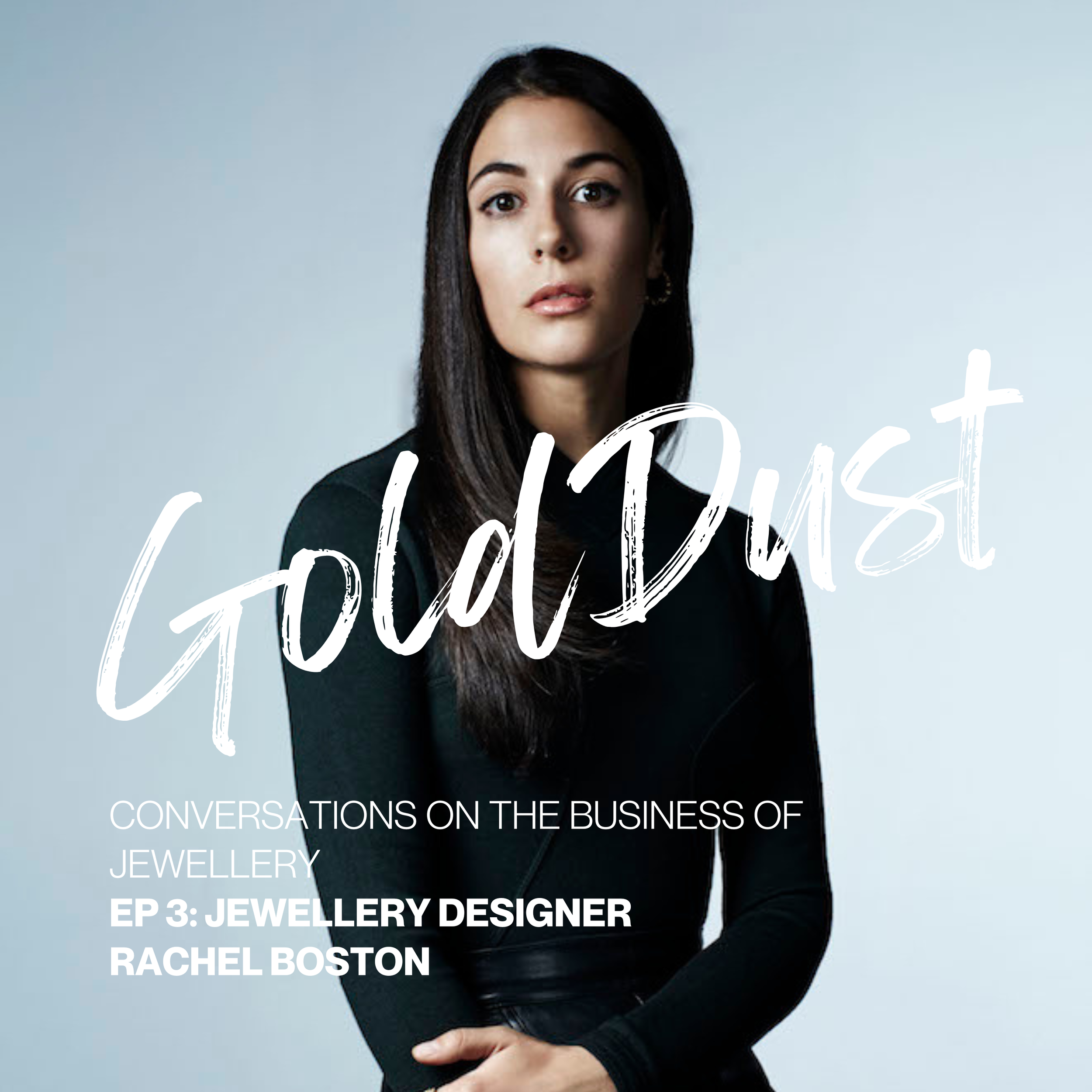
Episode 3: How Rachel Boston Built a Bespoke Jewellery Business in London - Without Outside Investment
Rachel Boston is one of London's most sought-after engagement ring designers - and she built her entire business organically, without investment, over thirteen years.
In this episode of the GoldDust podcast, Kate Baxter and Rachel trace the full journey: a workbench in a living room, a shared Brick Lane shop with a fellow designer, the trade show treadmill that nearly broke her enthusiasm, and the pivot to bespoke bridal that changed everything.
This is what commercial thinking actually looks like for an independent jewellery designer.
What we cover in this episode:
From shared bench to solo showroom: the early years of building a jewellery brand in London
Why Rachel left the wholesale model - and what the pivot to direct-to-customer did for her business
Opening a physical retail space on Redchurch Street: the risk, the numbers, and whether it was worth it
How customer expectations around bespoke engagement rings have changed
Developing a signature design handwriting that evolves without losing coherence
Lab-grown diamonds: Rachel's honest position
Navigating the gold price crisis as an independent jeweller
The advice Rachel comes back to when things get hard
Episode Summary:
The pivot that changed everything: from wholesale to bespoke
Rachel spent her early years chasing the wholesale market: two collections a year, trade shows, waiting all day for buyers who walked straight past her stand. A significant purchase order from Paul Smith gave her the capital to reinvest and move from silver into fine jewellery. What followed was a shift from wholesale to a direct bespoke model, and that, she says, was when the business really started to grow. She's clear that the trade show treadmill felt like the antithesis of what she wanted to be doing - making pieces worn forever, not seasonal fashion. The direct customer model let her reinvest consistently and keep pushing the business forward on her own terms.
Building a recognisable design identity over time
Rachel's aesthetic started with beetles and scorpions cast in silver, moved through art deco geometry described as modern deco, and has gradually become more minimal - but the thread running through all of it is the same: elegant and refined, with an edge. She talks about how that consistency, even when it's instinctive rather than strategic, is what builds customer trust over time. The knife edge band, bezel settings, clean talon claws - these are the details that have carried through her work across more than a decade, even as the overall aesthetic has evolved.
Why Rachel opened a physical showroom in East London
Running a prime East London showroom with a team of fifteen isn't the obvious path for an independent jeweller. Rachel explains why the ability to control the customer experience - the appointment, the sample set, the space itself - is non-negotiable for a bespoke business. She's direct about it: you can't sell what people can't see. Losing commissions to other jewellers who had a physical sample of something she could have made was the clearest evidence she needed.
How Rachel's customers have changed - and what they're asking for now
More couples coming in together. Women arriving alone or with friends before a proposal has even happened. References that have shifted from the Blake Lively oval to something bolder and more considered. Rachel attributes this partly to social media, partly to having a bigger back catalogue that gives customers confidence she can deliver more unusual pieces. She's honest that it's hard to know which factor is driving it when you're this close to your own business.
Lab-grown diamonds and the greenwashing problem
Rachel makes lab-grown engagement rings when clients ask, but she doesn't list them on the website. Her position mirrors how she approaches the wider conversation: if a client says they're choosing lab-grown for ethical reasons, she'll point them toward antique and reclaimed stones instead. If they want to spend less, that's a straightforward and valid reason and she'll work with it. Her own engagement ring is a salt-and-pepper diamond - what mattered to her was the origin, not the size or clarity.
Navigating the gold price crisis as an independent jewellery
With gold at record highs, Rachel talks through the practical reality of repricing a website with hundreds of pieces - laborious, time-consuming, and something she's had to do in sweeps rather than systematically. She absorbed costs for as long as she could, hoping gold would settle. It hasn't. Her view is that independent designers are actually better placed than large retailers to find creative solutions for clients - reducing weight, adjusting design - and that their margins, while under pressure, aren't carrying the same markup a big brand would apply.
The advice she comes back to when things get hard
A Maya Angelou principle: do the best you can until you know better, then do better. And a more practical note on presentation: project success even when you don't feel it. Rachel was never the vulnerable, behind-the-scenes type on social media - she presented confidence even in the difficult years. She thinks honest, personal marketing is genuinely powerful for some designers, but she's clear it doesn't have to be everyone's approach.
And finally, Rachel shares her ‘gold dust’ advice for new independent jewellers starting out in 2026
About Rachel Boston
Rachel Boston is a London-based fine jewellery designer specialising in bespoke engagement rings and bridal jewellery. Known for work that sits between the timeless and the considered, she runs her studio and showroom from Redchurch Street in East London, where she works with a team of fifteen. She studied at Central Saint Martins and has been building her brand independently since 2011.