The GoldDust Podcast: The Business of Jewellery
Episode 2: Polly Wales on Inventing Her Own Technique, Ditching Wholesale, and Building a Fine Jewellery Business Without Playing by Anyone Else's Rules
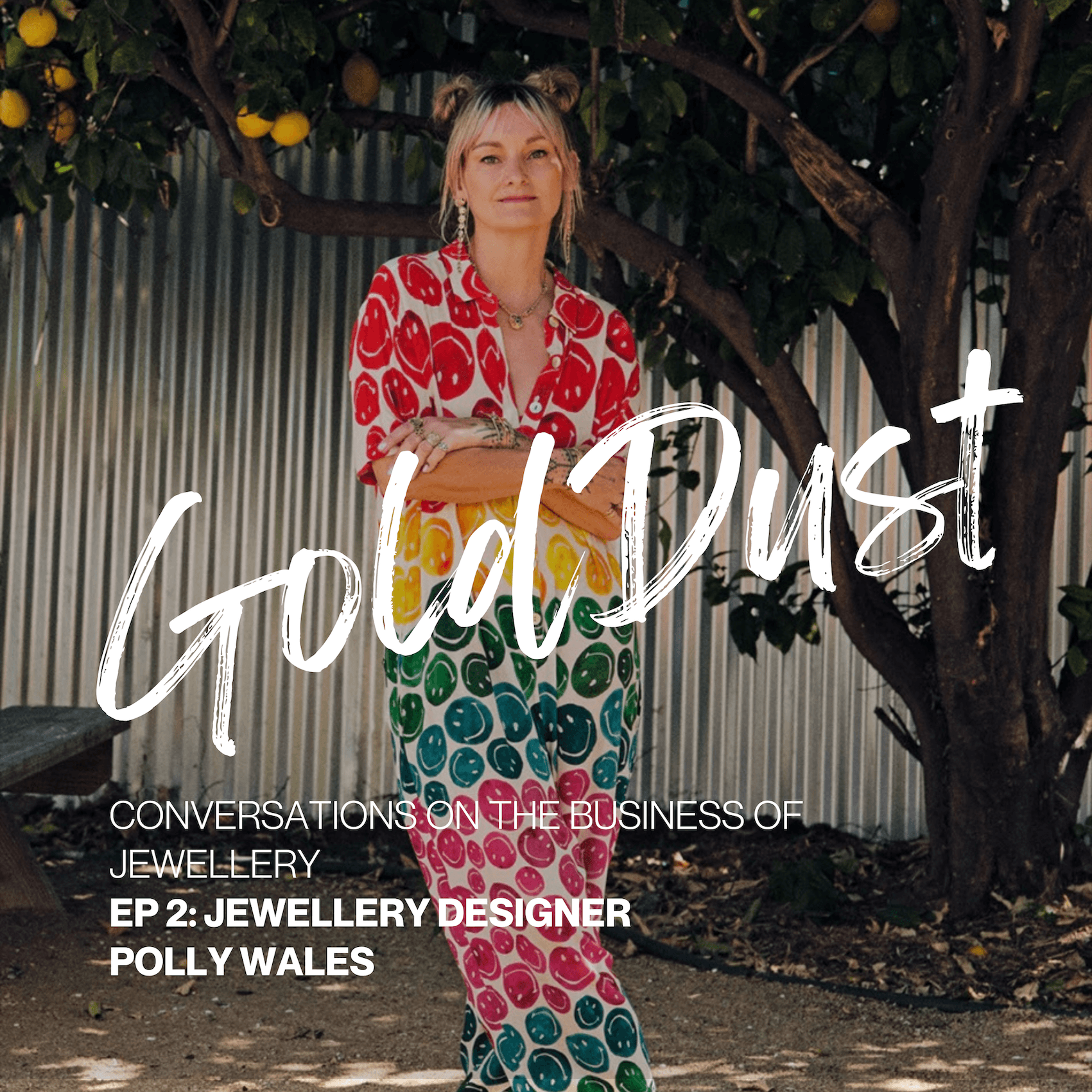
Twenty years ago, Polly Wales did something no one in fine jewellery had done before - she developed a way of casting gemstones directly into metal, a process now known as cast not set, that changed the aesthetic language of the entire category.
She built the business entirely without investment, moved her whole team from the UK to Los Angeles in 2015, and now runs a 3,000 square foot studio with fourteen people.
This is one of the most honest conversations about what it actually takes to build a distinctive jewellery brand from scratch; and why being an outsider in the industry might be the biggest advantage you have.
What we cover in this episode:
How Polly invented the cast not set technique — and what it took to make it commercially viable
Moving from the UK craft scene to the US market, and why American buyers changed everything
The COVID pivot: cutting 60 wholesale accounts and rebuilding around a direct-to-customer model
How Polly's hero pieces - the confetti ring, the skull ring, the padlock - were never the result of strategy
Why being an outsider in the jewellery industry is an advantage, not a liability
Branding as a reflection of who you actually are, not who the industry expects you to be
Lab-grown diamonds, greenwashing, and what Polly actually thinks about materials
The first hire that changed how she could run her business
What two decades of independent jewellery teaches you about staying true to your work
Episode Summary:
Inventing the cast-not-set technique, and building a business around it
Polly developed her signature process at the Royal College of Art: casting gemstones directly into molten metal rather than setting them afterwards. The results were deliberately imperfect - organic, eroded, tactile pieces that looked nothing like conventional fine jewellery. What she didn't anticipate was how long it would take to make the process commercially reliable, or how much education buyers and customers would need before they understood what they were looking at. The turning point was a single piece cast in gold with black sapphires; taken to a New York trade show alongside her silver work. The penny dropped for buyers, and orders followed.
Why the US market was the making of the brand
Polly started doing US trade shows in 2007, straight out of the Royal College. The contrast with the UK market was immediate - American stores wrote purchase orders on the spot, whereas UK culture defaulted to consignment. That difference in commercial structure shaped where the business grew. By 2015, she moved her entire team (eight people!) from the UK to Los Angeles. She's direct about the reason: the customer base and the revenue were there.
The wholesale exit and what happened after COVID
Pre-COVID, Polly Wales ran roughly 60 wholesale accounts, with wholesale making up around 80% of revenue. When COVID hit, she had just returned from Paris with a full order book and watched stores cancel one by one. What followed surprised her: existing customers came directly, wanting to support independent makers. New customers arrived; women redirecting travel budgets into jewellery. She used that window to cut the majority of wholesale accounts, rebuild around direct retail, and restructure the business. The split is now roughly 80% direct retail, 20% wholesale. It took a couple of years to stabilise, she says, but it was worth it.
Hero pieces, signature aesthetics, and why following the data would have killed the skull ring
The confetti ring has been Polly's top-selling product for years. The skull ring - now her second best seller and central to the brand's visual identity - was originally rejected by every wholesale buyer who saw it. It took five years before it found its audience. Polly's point is clear: if she had applied standard product metrics, both pieces would have been discontinued long before they became brand assets. The lesson for independent jewellers isn't to be anti-strategic, but to understand that some of the most commercially valuable things you make won't look that way at first.
Branding as an expression of who you actually are
The Polly Wales rebrand - the bold, punk, unapologetically loud website and visual identity - came out of COVID, at exactly the moment she stopped trying to meet external expectations. She had come from the UK craft scene, where the default was a white website, grey font, and polished restraint. The new brand was built with her partner James, who she describes as the person who keeps the business true to its principles. Her view: if you know who you are and you stop performing for an audience that isn't yours anyway, branding becomes straightforward.
Being an outsider, and why it's worth protecting
Polly describes herself as always having been an outsider in the jewellery industry, from her student work through to now. The aesthetic she built was never designed to fit the category; it was designed to fit her. She makes the point that much of the visual language now common in fine jewellery - the organic textures, the cast-in-place stones, the imperfect surfaces - originated with her work. She doesn't labour the point, but it's worth stating: the outlier position she held for years became the template others followed. That tends to only happen when you don't compromise early.
Materials, lab-grown diamonds, and the greenwashing problem
Polly uses 18 karat gold and works with recycled post-industrial gold. She doesn't use lab-grown diamonds and steers clients away from them, not out of snobbery, she's clear about that, but because of the greenwashing that surrounds the sustainability narrative. She's equally direct about greenwashing elsewhere in the industry, including brands that describe post-industrial recycled gold as repurposed heirlooms. The stones that interest her are ones with character, nature, and a real story - which is consistent with the wider aesthetic logic of the brand.
The first hire that shaped how the business grew
Polly is dyslexic. Her first hire was a fellow Royal College graduate who worked part-time and helped with the paperwork and admin that Polly couldn't efficiently manage herself. She frames it as a structuring decision that kept her at the bench - which is where, she argues, her value to the business actually sits. Most independent designers, she observes, grow and then delegate bench work to manage the admin. She did the opposite, and she believes that's part of why the creative output stayed strong.
The advice she gives independent jewellers who are struggling
Be true to what you believe in and make the things you actually want to make. Her reasoning is specific: if you fail doing that, at least you've done yourself justice. If you compromise to fit a mold and then fail anyway, you've lost both ways.
About Polly Wales
Polly Wales is a London-born, Los Angeles-based fine jewellery designer who invented the cast not set technique - a process of casting gemstones directly into metal that has been widely emulated across the industry since its development in the early 2000s. She studied at the Royal College of Art and has been building her brand independently for over twenty years. She runs her studio, workshop, and showroom from a 3,000 square foot space in Los Angeles with a team of fourteen.